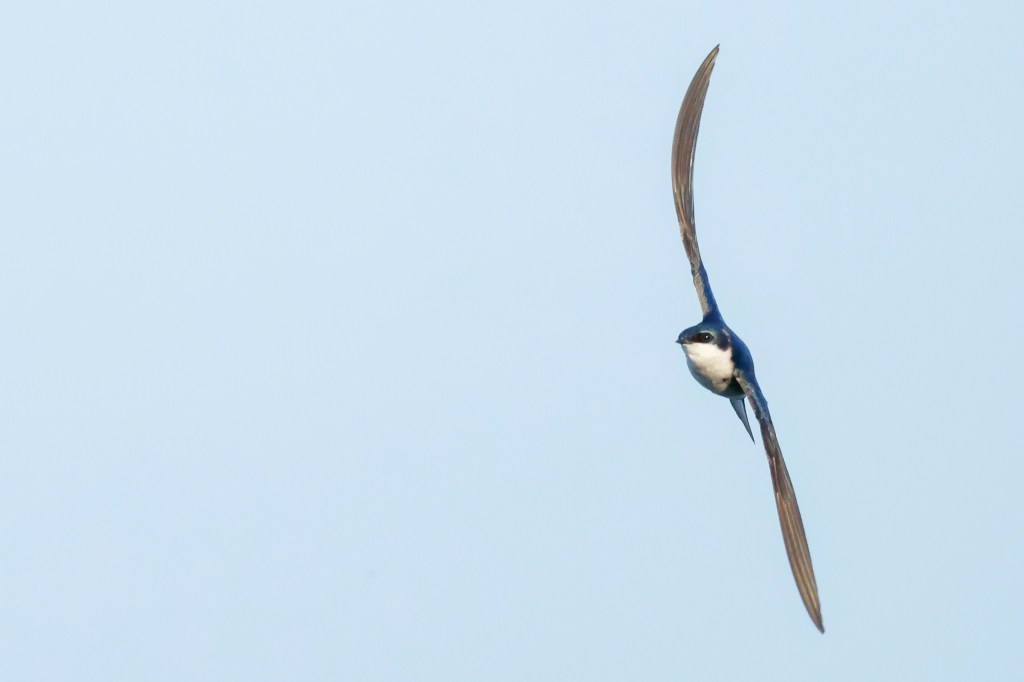
A year into birding, I’m now more confident about identifying birds when I can see their color patterns as they fly by me. However, when birds fly against the sky or the sun, they can appear completely dark, causing me to struggle to identify them. In turn, I’m attempting to learn some recognizable flight patterns, wing shapes, and wingbeat rates of the birds in my area.
Bird wing types fall into several categories, including passive soaring wings, active soaring wings, elliptical wings, high-speed wings, and hovering wings. Below are a couple of examples of wing shape and wingbeat patterns that have really caught my eye.
European Starling
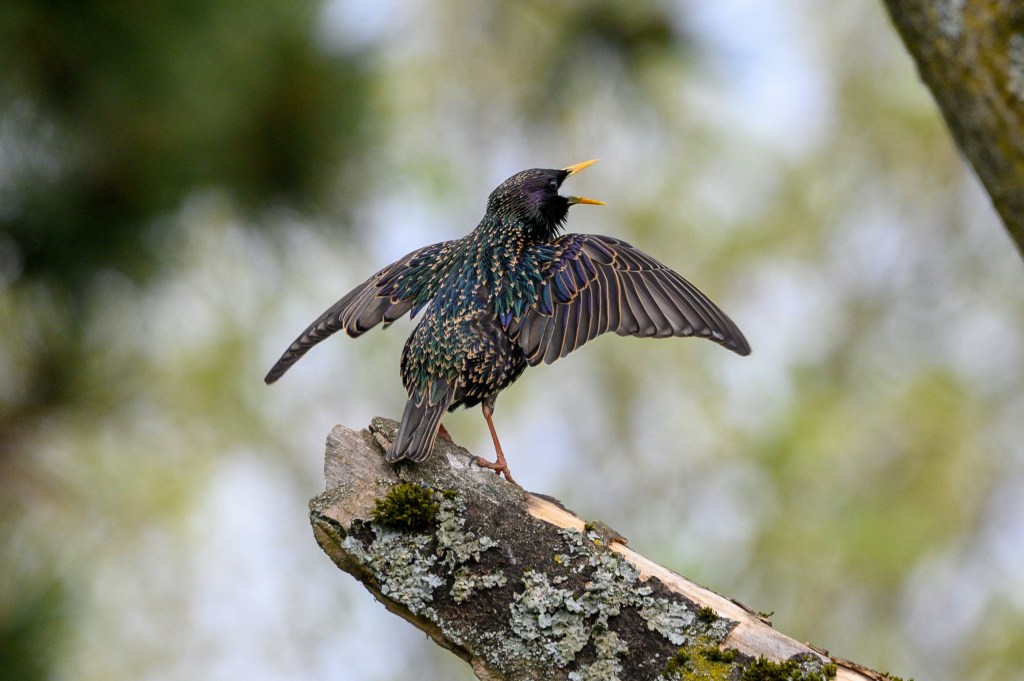
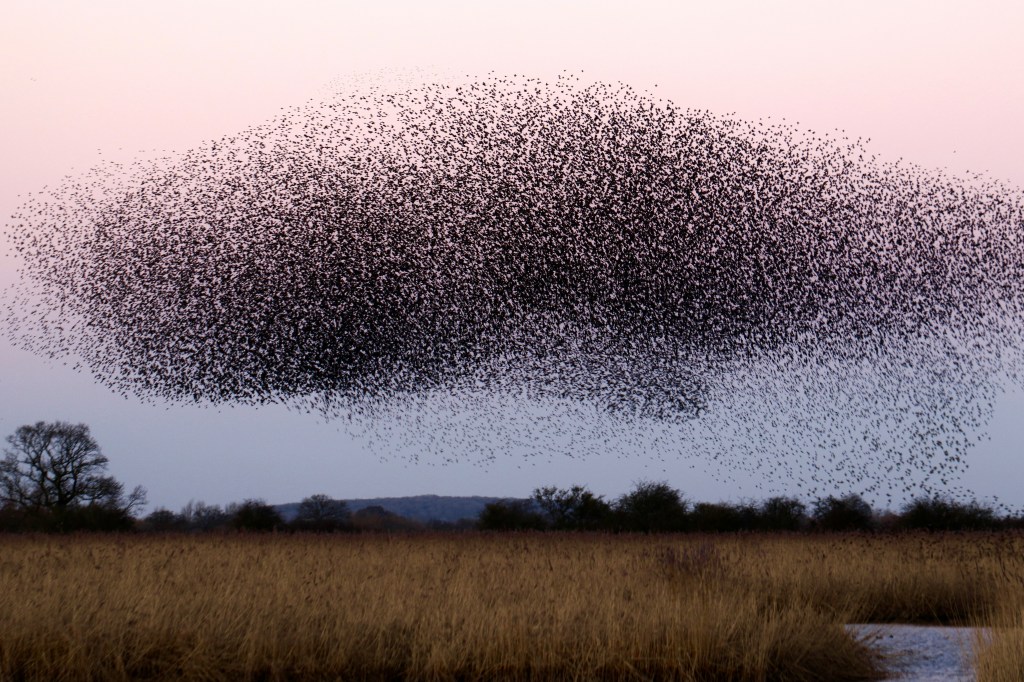
Starlings are famously known for murmuration, or when many starlings, ranging from a couple hundred to several thousand, group together and fly in synchronized swooping patterns. Part of why they can fly in these patterns is because of their elliptical wing shape. These wings are short, rounded, and are highly slotted at the edges. This allows starlings and other birds with similar wing types to make quick and tight maneuvers along with short bursts of high speed. All of this requires the bird to flap its wings extremely quickly in order to maximize maneuverability, preventing sustained fast flight (starlings have to flap their wings around 13.3 times a second; when hundreds of birds fly together, their combined wingbeats create the rapid whirring “murmur” sound). Although their wing shape gives them excellent control, it is less suited to maintaining high speeds over long distances.
Tree Swallow
I often see these birds in our local open fields. These swallows have the high-speed wing shape. These wings are long, narrow, and pointed. They allow birds to maintain incredibly fast flight, and are designed to reduce drag and maximize aerodynamic performance.
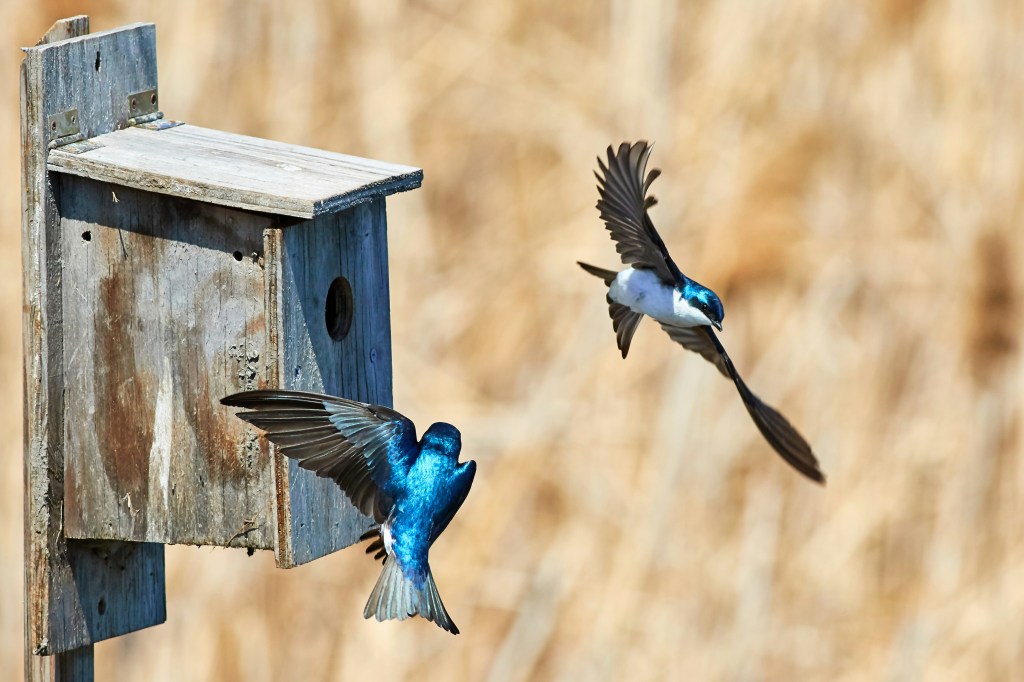
In addition to their wing shape, tree swallows have a streamlined body, disproportionately long wings, and forked tails to allow for acrobatic twists to catch insects and stay airborne. Other birds of their wing shape have poorer maneuverability and can require running starts to take off or rapid but shallow wingbeats to stay flying, but the body shape and forked tails of tree swallows result in both speed and remarkable agility.
Comparing these birds has shown me how wing shape reflects the environments and behaviors for which each species is adapted. Birds with elliptical wing shape like starlings and robins have adapted to maneuvering through forests and neighborhoods, but are less able to maintain high speeds. Birds with high-speed wing shape generally have poor maneuverability but can reach and maintain high speeds (tree swallows represent an exception).
Learning these patterns gives me another way to identify birds when color and markings are hidden. Even when a bird appears only as a dark silhouette, its wing shape, wingbeat rate, and style of movement can provide important clues to its identity.


Leave a Reply