When I checked the weather app yesterday morning, it stated that the air quality was in the red “unhealthy” range, due to the wildfires in Canada. Luckily, I was able to stay indoors and avoid breathing in the toxic particles. But I know others could not avoid being outdoors. This made me wonder: how does poor air quality affect birds and how do they deal with it?
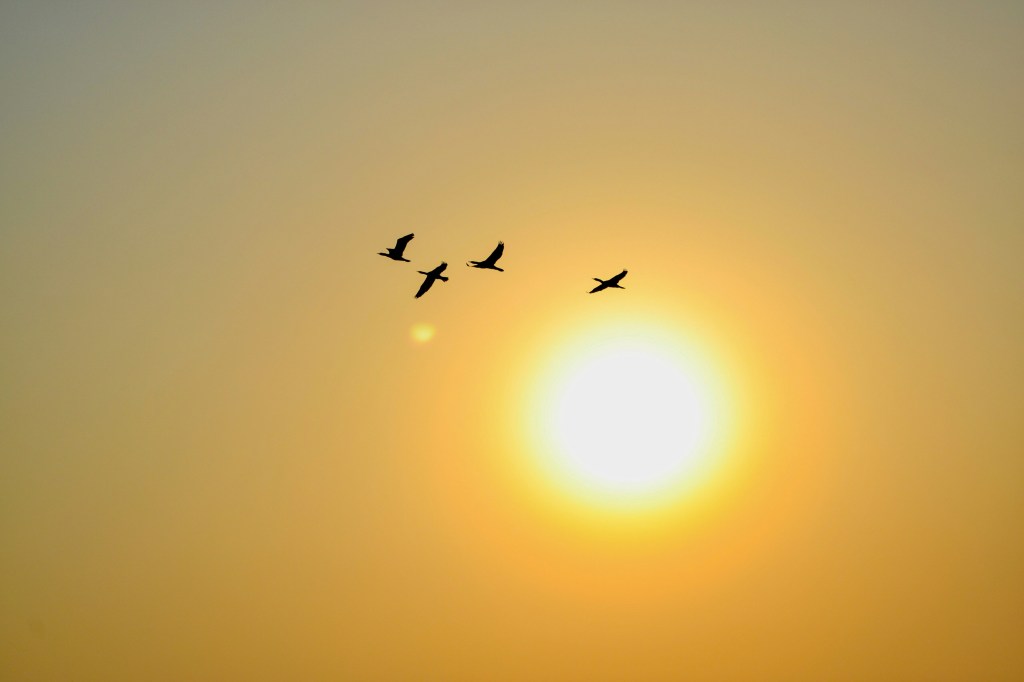
Air pollution/poor air quality is very bad for birds because their respiratory systems are extremely efficient, extracting around twice the amount of oxygen per breath compared to humans. This, in addition to the fact that they lack the mechanisms to clear airways, is why unhealthy gases impact birds even more than humans.
Bad air quality can lead to increased stress levels, respiratory problems, lowered reproduction success, weaker immune systems, and decreased body mass (food can become harder to find). It can also cause reduced vocalizations from birds, restricting one of a bird’s most important tools. Migrating birds are especially vulnerable since their migration requires higher energy demands, causing air pollution to either force migrating birds to change directions or harm entire flocks*. However, birds do not necessarily have a good way of predicting bad air quality, and so they may not be able to avoid toxic air altogether. Nestlings or fledglings may also be unable to fly away to areas with cleaner air.
Birds have some options to limit the impact of air pollution*, though. They can:
- Reduce physical activity
- Lower breathing rate
- Settle into dense foliage (acts as a natural buffer)
- Migrate to areas with cleaner air / higher altitudes (only if possible)
- During major wildfire smoke events, GPS tracking has shown that some migrating birds pause migration for several days or alter their flight paths until smoke conditions improve, suggesting they can adjust their behavior in response to poor air quality.
I worry about the impact of these recurrent wildfires on not just humans but all animals. Understanding how smoke affects wildlife will become increasingly important, since some research suggests not just immediate health risks but also longer term effects, including potential population decline*. Protecting air quality benefits not only people but entire ecosystems.
*This topic is not well researched since it is not a priority for humans and also because the constant movement of birds and air make it challenging to study.


Leave a Reply