I have always hoped to find nests in the wild, whether abandoned, or with eggs or chicks inside. The first nest I saw was while on a birdwalk at John Heinz Wildlife Refuge. While waiting with the birdwalk group in the parking lot, a fellow birder suddenly pointed out that there was a Mourning Dove nest in a tree. I was shocked to see that the nest was not actually that big. It also wasn’t abandoned- two Mourning Doves soon flew into the nest. The nest itself didn’t seem to be more than sticks haphazardly put together to form a blob. Another birder then mentioned that Mourning Doves were “bad nest builders”, and that made me wonder what made some nests better and why some birds would put in such little effort or be as bad as they are at building nests.
A couple weeks later, I found the nests of a Gray Catbird and an Eastern Wood-Pewee in a forest in my town. They were just a few yards away from each other but the Gray Catbird nest seemed to have been abandoned before the Eastern Wood-Pewees built a nest.
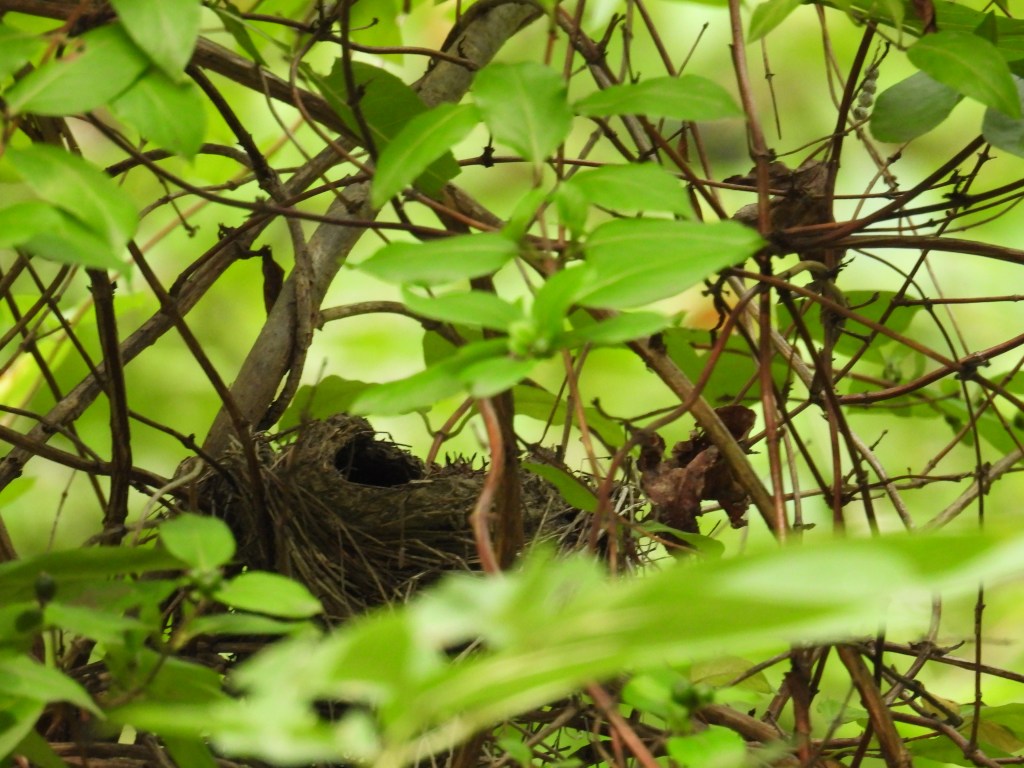
The catbird nest looked like a ball but with an opening on the top that seemed slightly smaller than the bird itself. It was in a shrub between multiple branches.
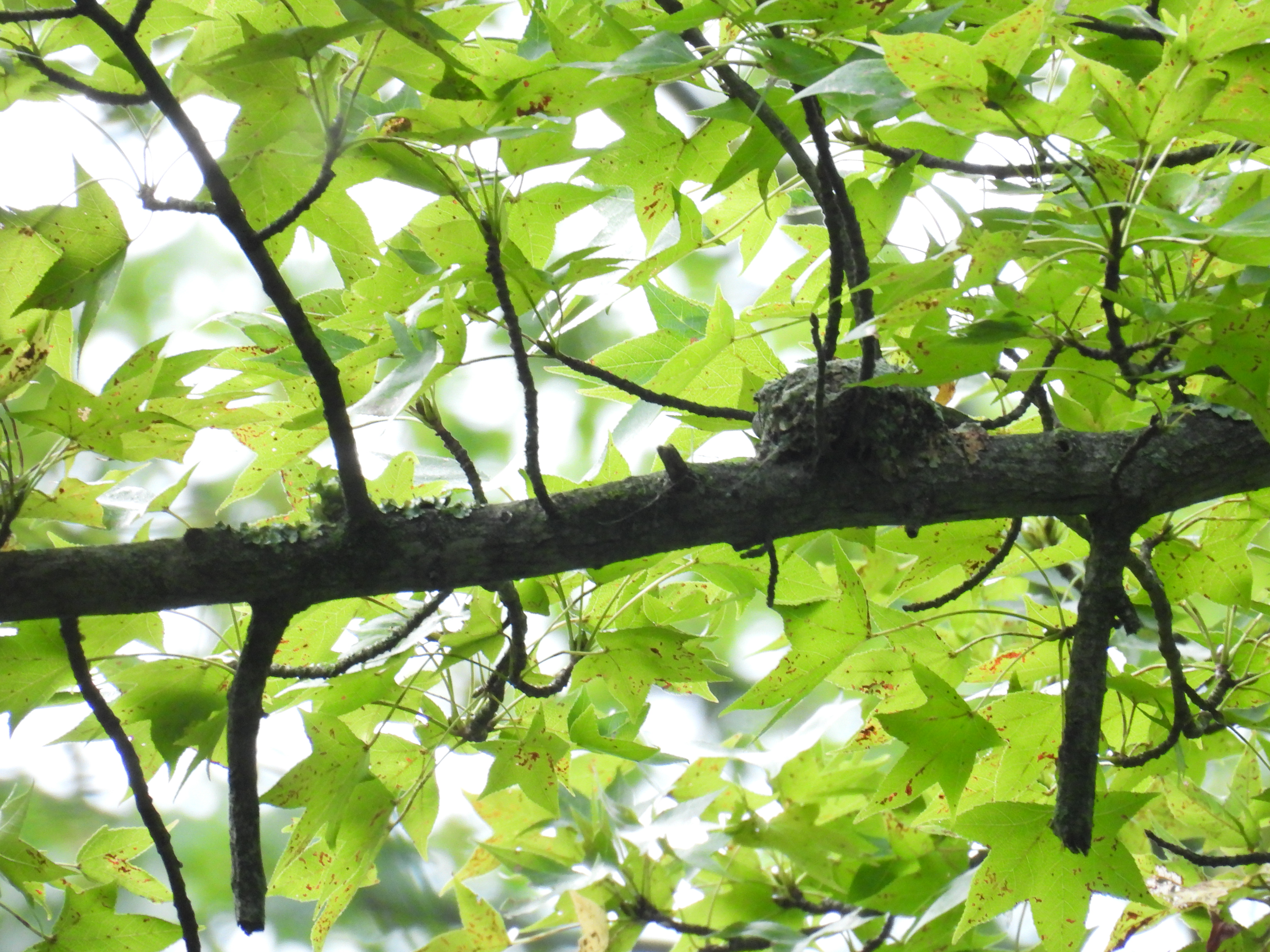
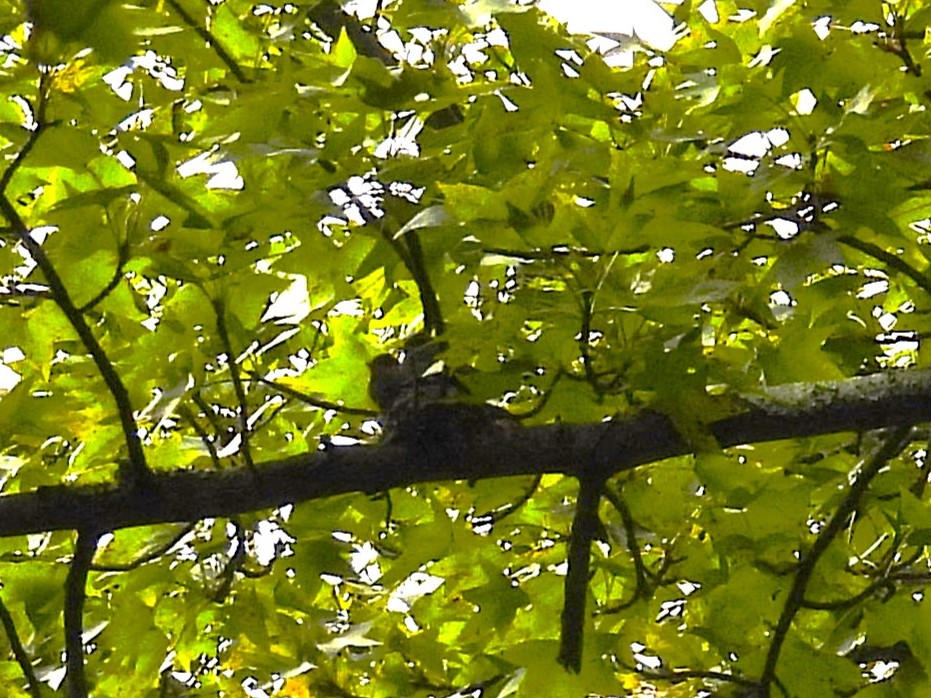
The Eastern Wood-Pewee nest looked like a small lump on a high horizontal tree branch that was hanging over a stream. The image on the right is not as good quality but I managed to catch the birds in the nest in that day.
Both nests are considered cup nests, which is one of ten nest types for birds (the other nest types are: scrape, platform, domed, pensile, pendulous, globular, cavity, burrow, and mound). The cup-shaped nest is the most common type of nest, and is used by the American Robin, Northern Cardinal, finches, and hummingbirds. Cup nests are constructed on a tree branch or in a tree crook and can be anywhere from on the ground to high in the canopy. They are composed of coarse materials like sticks and bark on the exterior but are lined with softer materials like moss, fur, and feathers on the inside. Some birds weave the exterior materials into a cup while other birds use sticky substances to solidify the nest. The nests allow the adults to comfortably incubate eggs and keep chicks warm. However, since it is not very closed off, the adults have to constantly ward off predators.
Nest design involves several trade-offs. Birds have to balance protection from predators with temperature regulation, while also considering the time and energy required to collect materials and construct the nest. Researchers have found that nest construction can be energetically costly, meaning that spending more time building a stronger or more insulated nest is not necessarily free for the parent birds. Nest placement is also important because factors such as food availability, predator risk, available materials, and the surrounding climate can all influence where a bird chooses to nest.
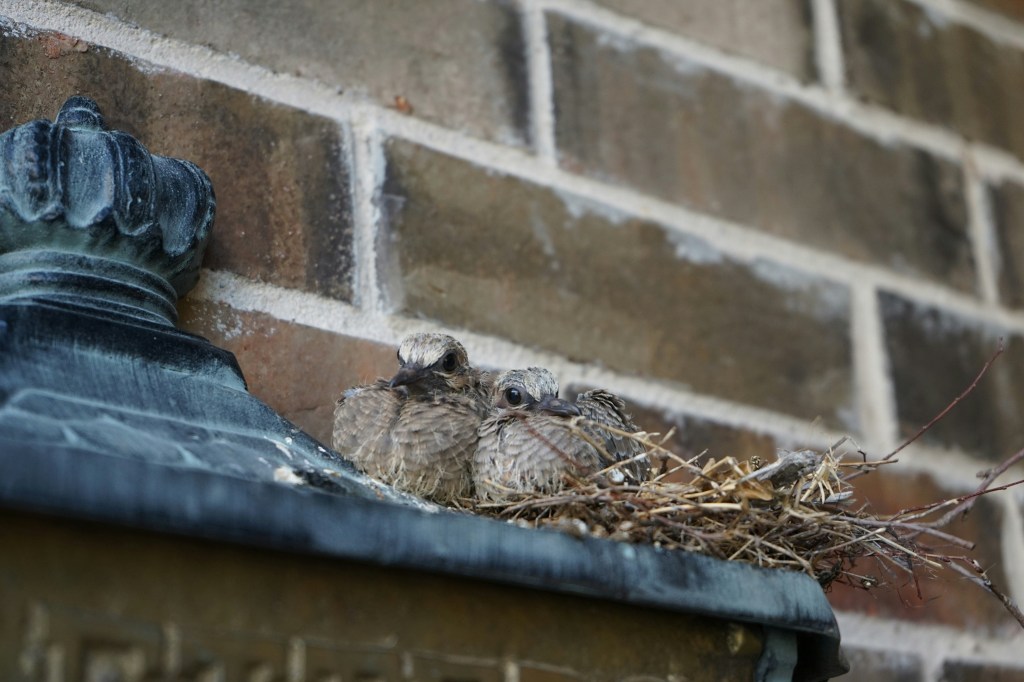
The Mourning Dove nest, an example of a platform nest, made me rethink what it means for a bird to be a “good” nest builder. Compared with the carefully woven nest of the Gray Catbird, the Mourning Dove’s nest almost looked unfinished, like a loose collection of twigs that seems barely strong enough to hold the eggs (the AllAboutBirds website calls it a “flimsy assembly”). But their simple nests may reflect a different nesting strategy. Maybe this helps the birds to more quickly construct their nest while relying partly on the nest’s location and their behavior to successfully raise their young. I also wonder if the flat wide shape is more sturdy on the branch, and allows for good drainage. This made me realize that a nest does not necessarily have to look impressive to be effective. What looks poorly constructed from a human perspective may actually represent an adaptation to the bird’s environment and way of life.


Leave a comment